Rehabilitation
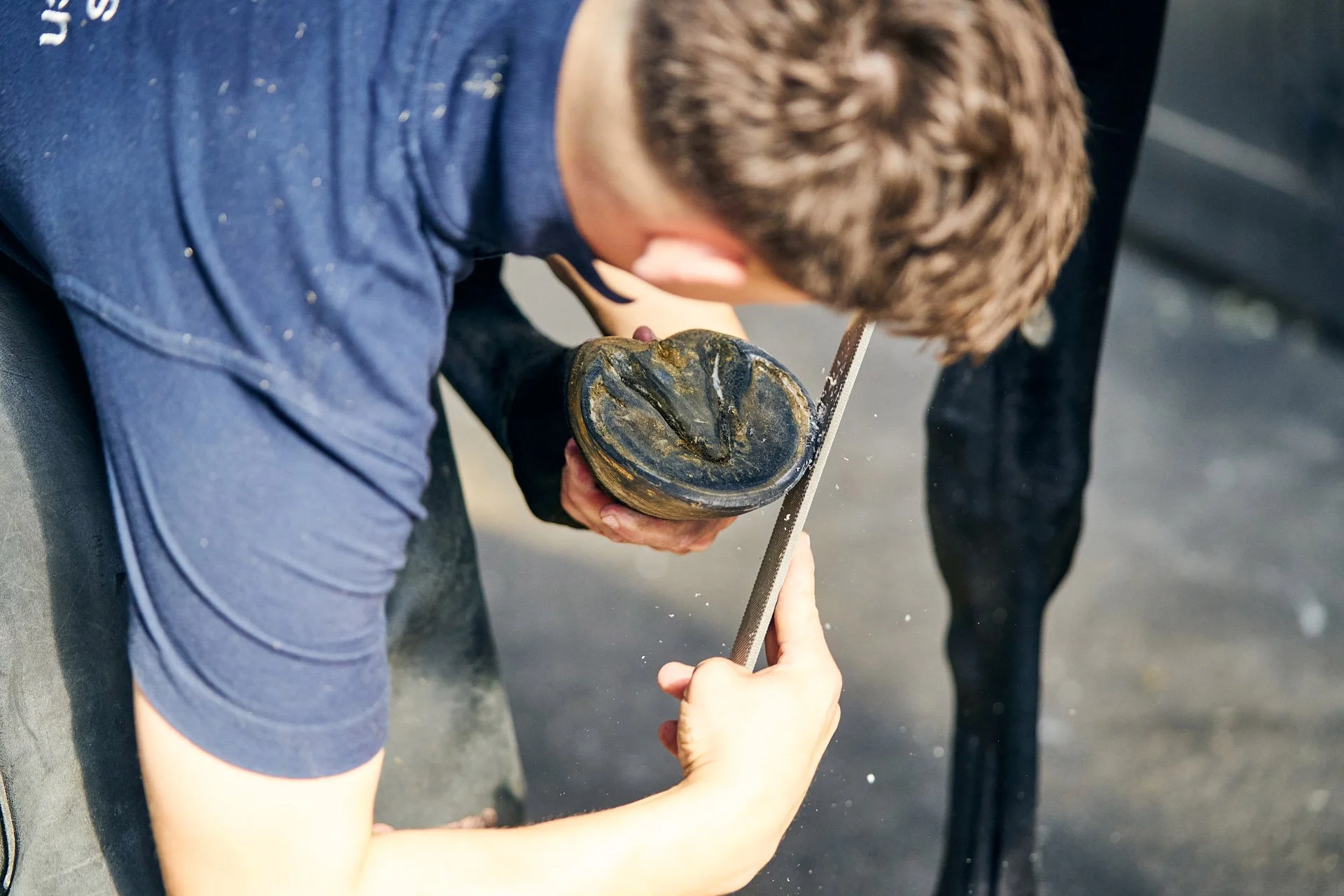
Ashmount Forge provides specialist rehabilitation farriery for horses recovering from injury, managing chronic soundness issues, or transitioning through periods of rest and reduced work. This work sits at the intersection of hoof care, biomechanics, and veterinary management, and requires a different mindset from performance shoeing alone.
Rehabilitation often takes place during periods of downtime — horses out of training, in pre-training, at veterinary facilities, or turned away at grass. These phases offer a unique opportunity to influence posture, loading patterns, and hoof balance in ways that are simply not possible when a horse is in full work.
Understanding the whole horse
While some rehabilitation cases involve primary hoof pathology, many relate to injuries higher up the limb: tendons, ligaments, joints, muscles, and skeletal structures. In these situations, the hoof becomes both a reflection of the problem and a tool for managing it.
An uneven limb will load a foot unevenly.
An altered posture will change how a hoof grows.
A compromised horse will move differently, often long before lameness is obvious.
Our role is to understand that full picture — how the horse stands, moves, lands, and loads — and to use farriery to support the wider rehabilitation process rather than working in isolation.
Assessment, movement, and biomechanics
Every rehabilitation case begins with detailed assessment. We place particular emphasis on:
Foot flight and arc symmetry
Landing pattern and capsular loading
Posture and stance
Medial–lateral and caudal balance
How the horse adapts as work levels change
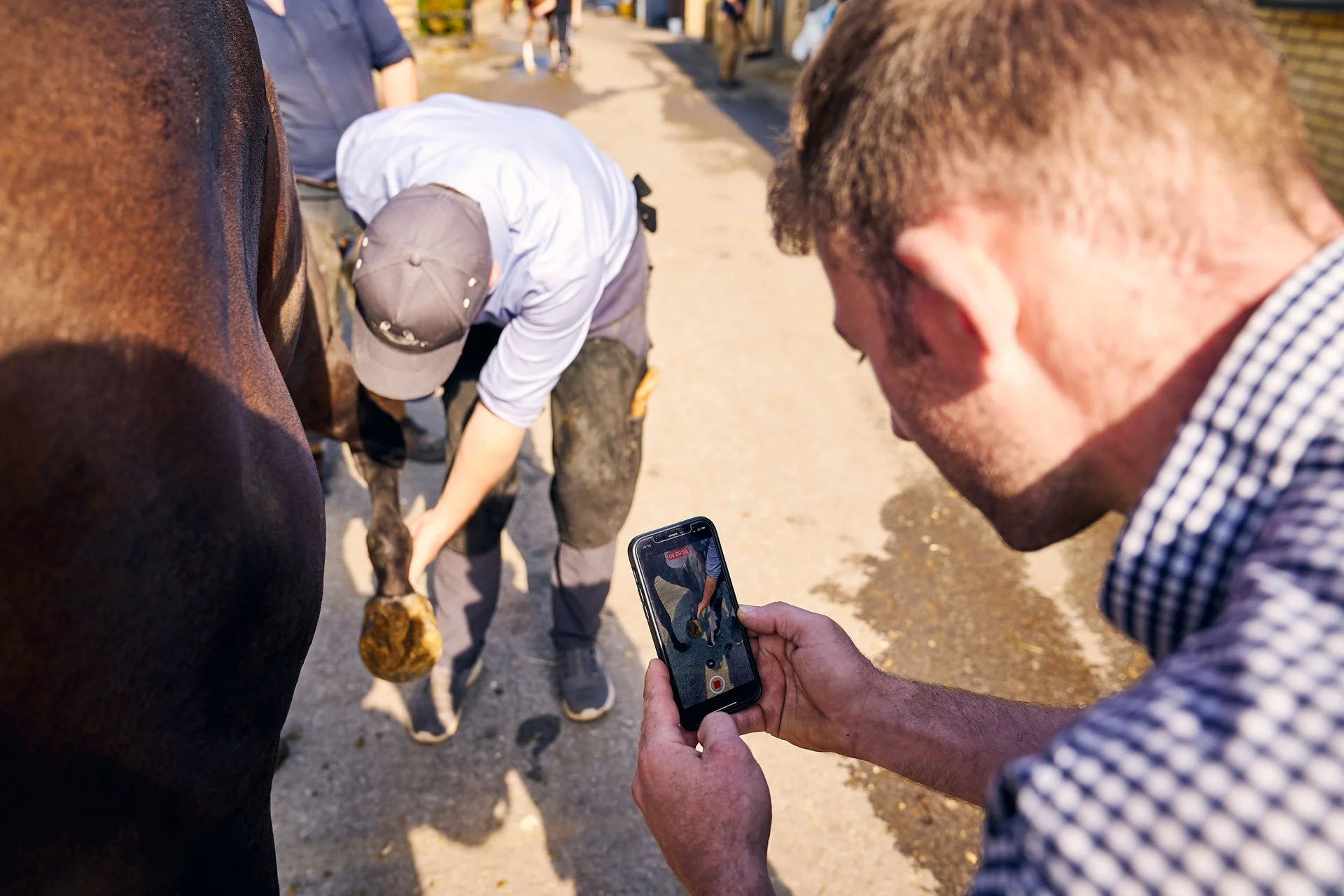
This is supported by video analysis and digital record keeping, allowing us to track change over time and make informed, progressive adjustments rather than one-off corrections.
Modern rehabilitation places increasing emphasis on biomechanics, posture, and movement quality, and we actively integrate current research and best practice into how we manage cases.
Working within rehabilitation programmes
Rehabilitation rarely happens in a vacuum. Horses may be on treadmills, in controlled exercise, in long-reining, or turned out. They may be weeks from returning to work or months away.
We work closely with veterinary surgeons, physiotherapists, and rehabilitation yards to understand:
The nature and severity of the injury
The timeframe available
The stage of recovery
What the horse is and is not allowed to do
This allows shoeing and trimming decisions to be aligned with the wider plan, rather than working against it.
Targeted support through farriery
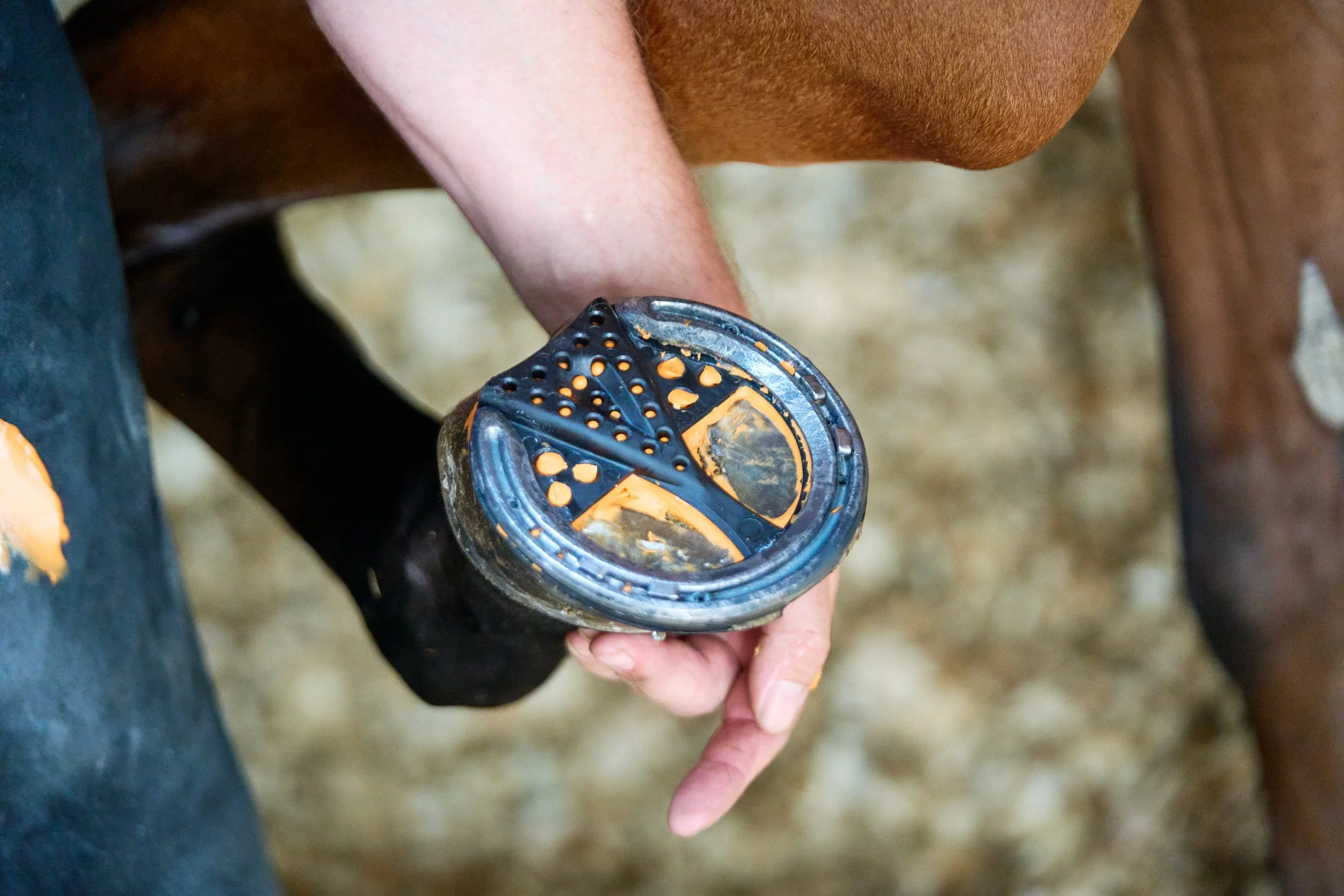
Rehabilitation farriery often involves providing the foot with support it does not currently have — whether that is lateral support, caudal support, or altered breakover — to compensate for weakness, pain, or asymmetry elsewhere in the limb.
Because horses in rehabilitation are not subject to the same performance demands as racehorses in full training, there is often greater scope to make meaningful structural change during this phase.
However, every intervention is carefully weighed against:
The horse’s long-term foot health
The risk of creating dependency or distortion
The commercial and time constraints of the case
Equipment, materials and adaptability
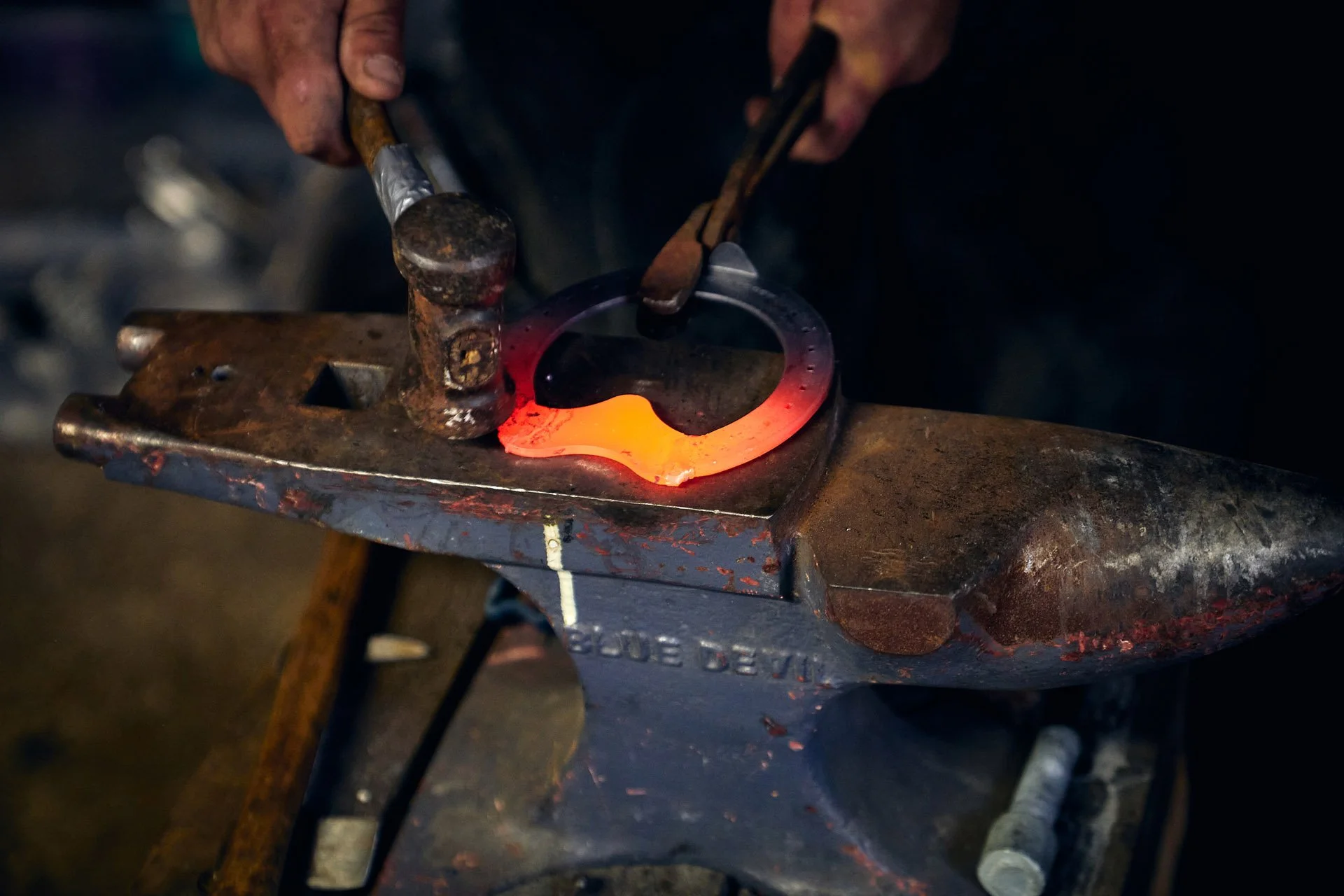
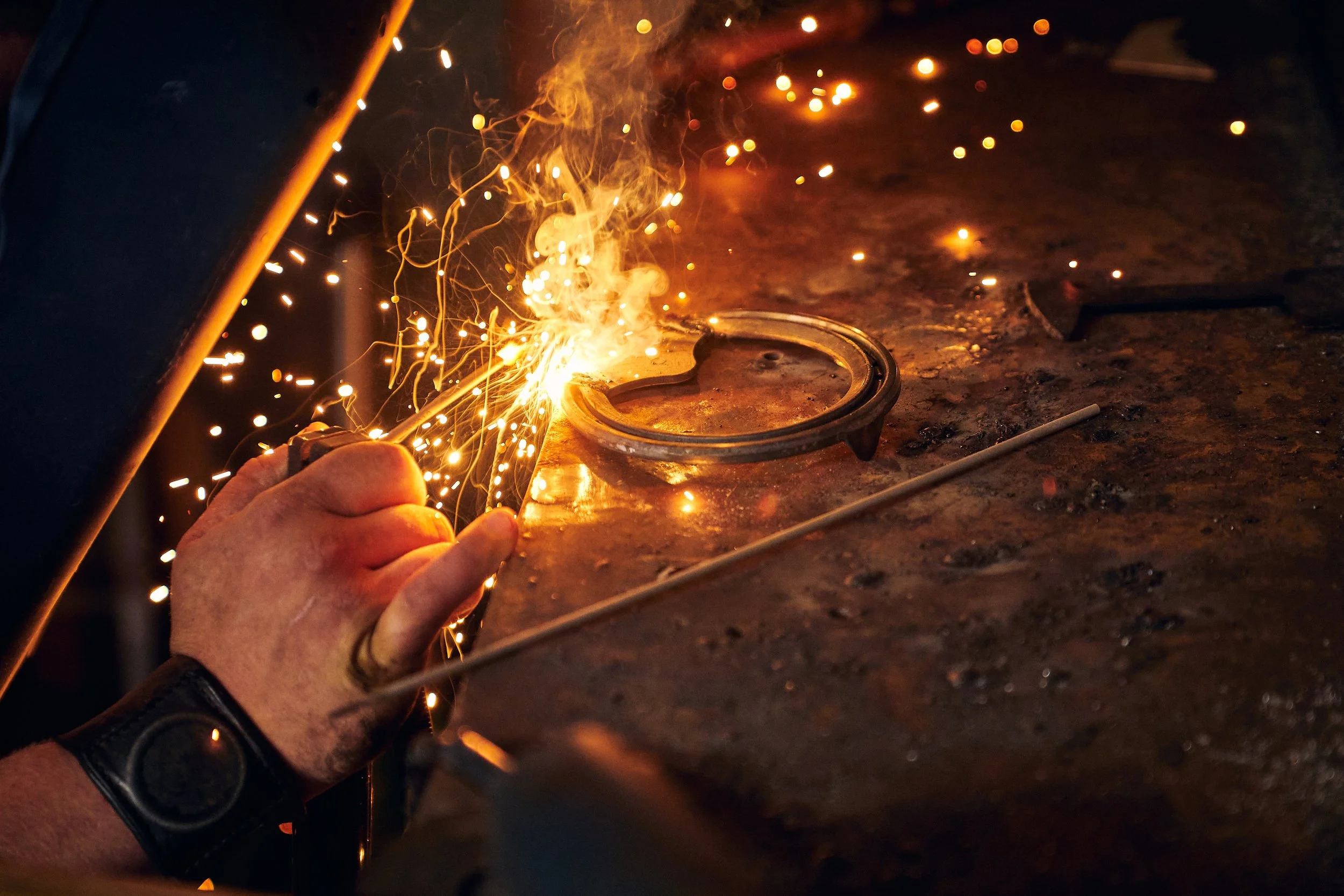
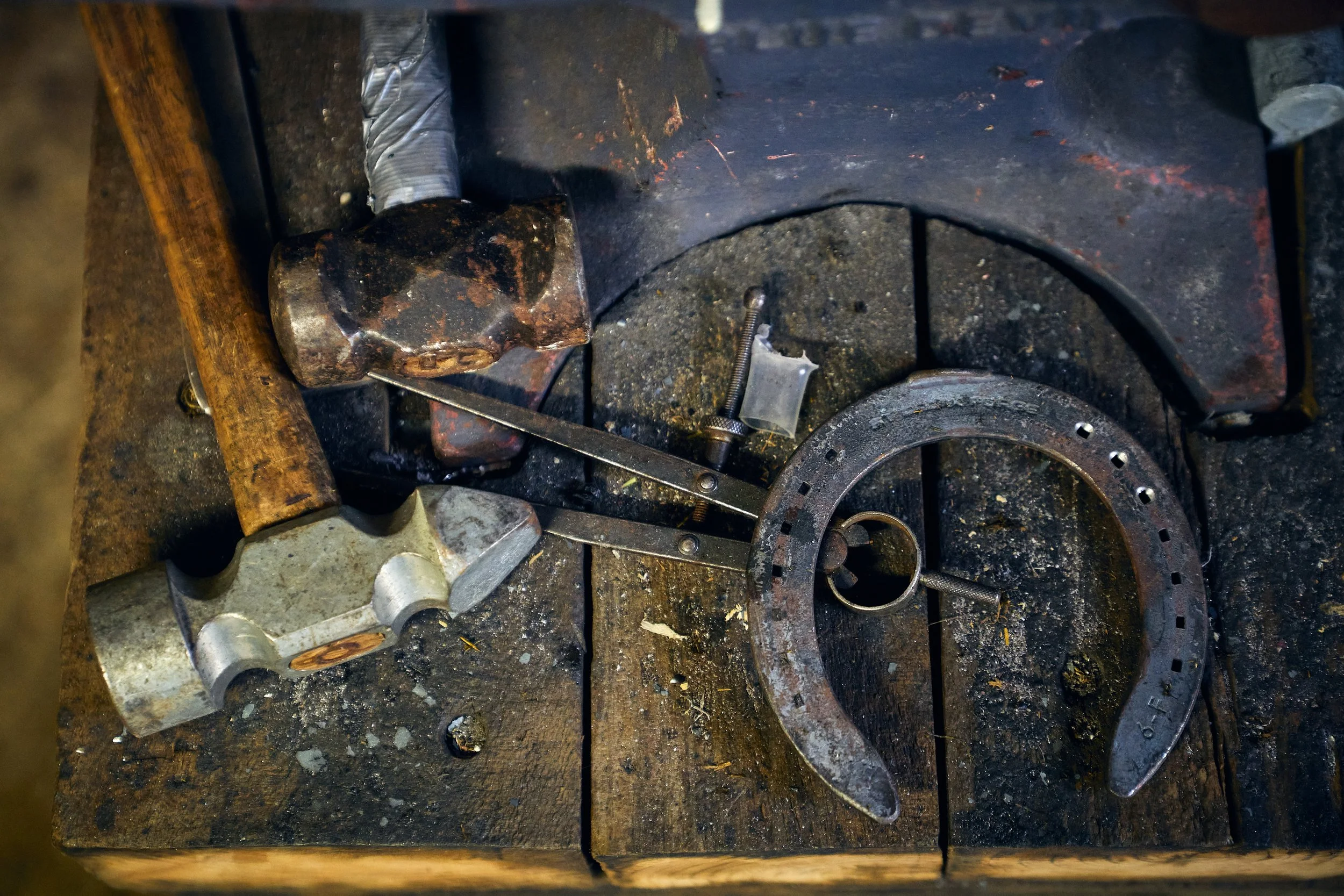
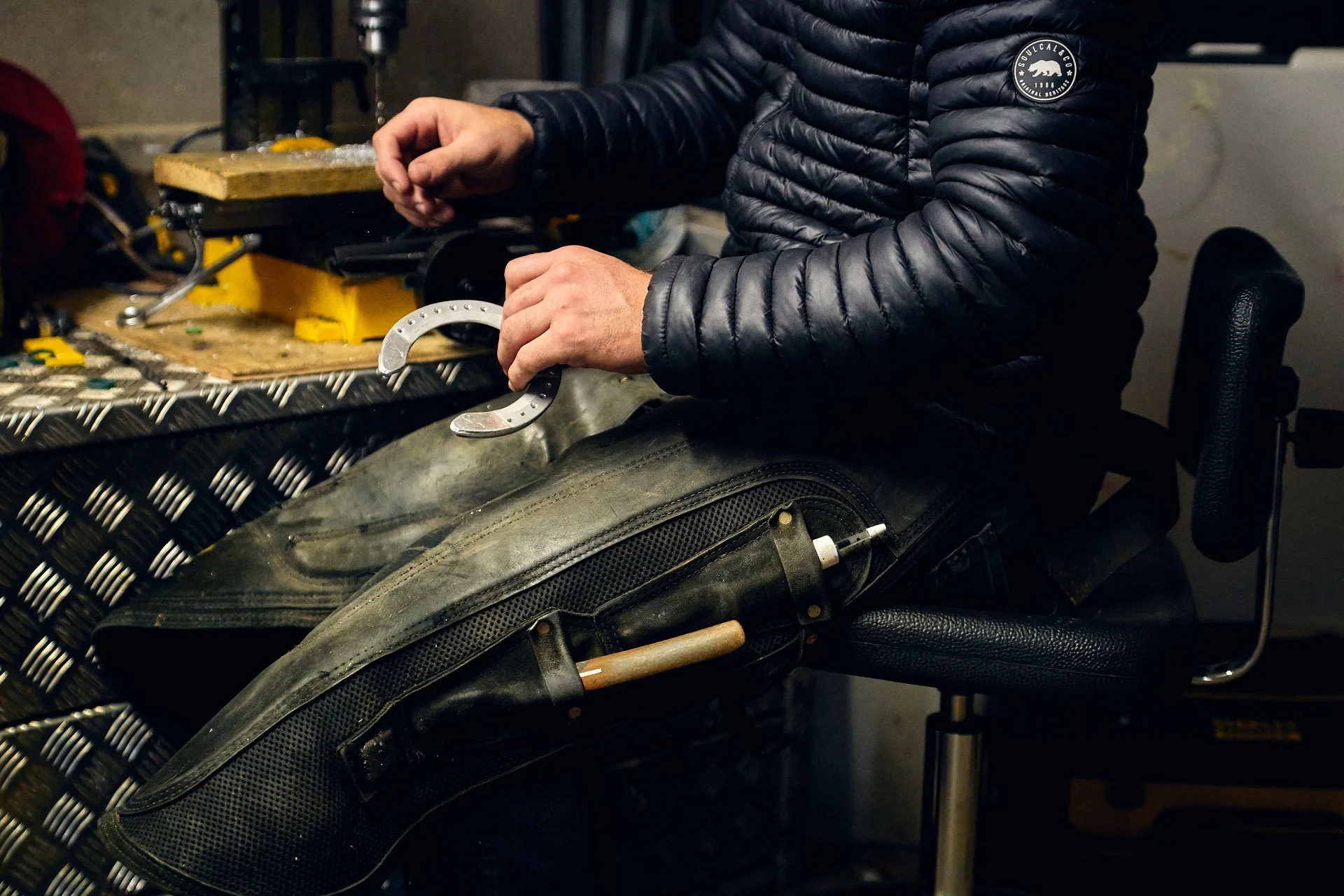
Our rehabilitation work is supported by fully equipped, mobile forges with the ability to fabricate, weld, and modify shoes on site. This allows us to create bespoke solutions when off-the-shelf options are not appropriate.
We also work closely with veterinary practices and suppliers to access modern therapeutic and supportive products when needed, ensuring that material choice complements the clinical goal rather than complicating it.
Individual cases, individual solutions
No two rehabilitation cases are the same. Some horses return quickly to full work. Others require long-term management. Many sit somewhere in between.
What unites them is the need for careful thought, honest assessment, and clear communication between everyone involved.
Our aim is always the same: to restore comfortable, efficient movement, protect the hoof capsule, and give the horse the best possible chance of returning to work — or remaining comfortable and functional if full athletic recovery is not possible.